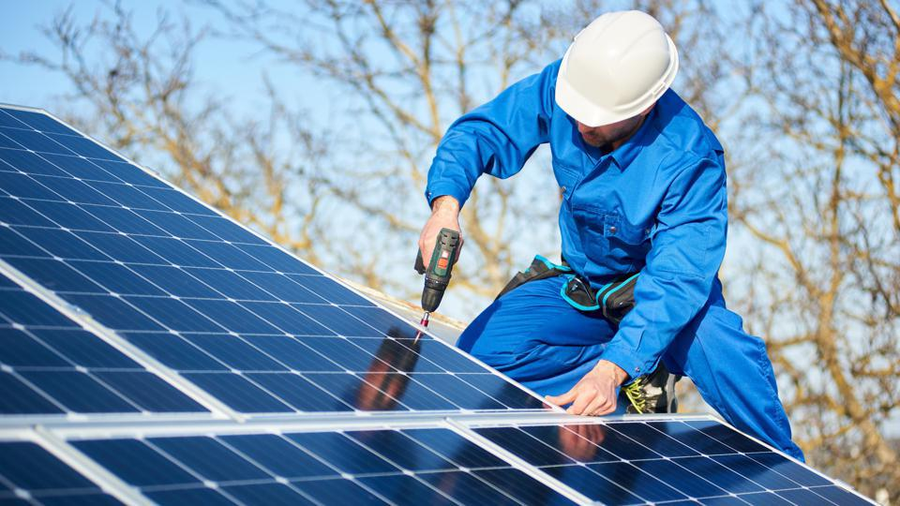
Solar Equipment We Use in Nova Scotia
Tier-1 panels, microinverters, and racking, tested through Atlantic weather and backed by some of the strongest warranties in the industry.
What Goes On Your Roof, and Why
A residential solar system has three main components on the roof, plus the electrical interface into your home. Below is exactly what we specify by default on OYO Energy installs, why we specify it, and what the warranties actually cover. These are the same LONGi panels, Hoymiles microinverters, and Pion Solar racking that appear on every one of our real client proposals, not a generic manufacturer list.
LONGi Tier-1 Monocrystalline Modules
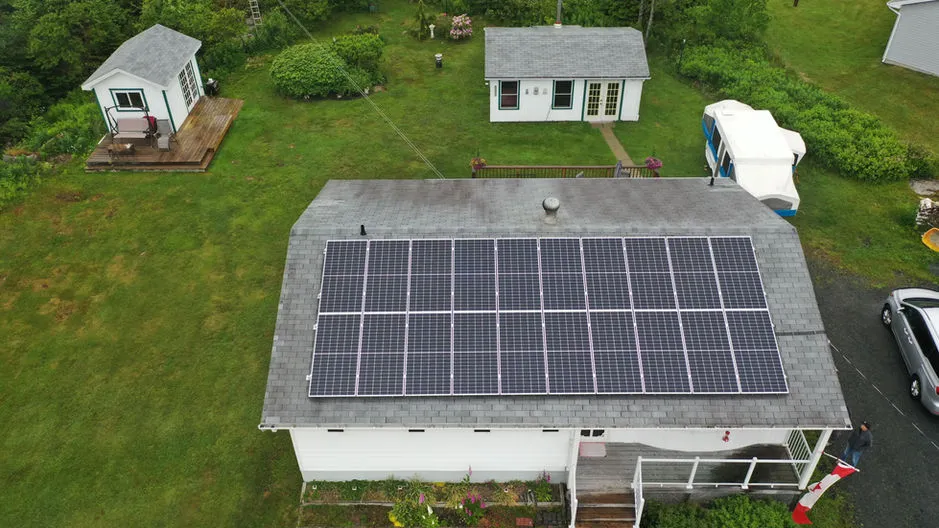
Solar panels are the heart of the system. Tier-1 designation refers to the manufacturer's financial strength, manufacturing scale, and bankability, not just cell quality. Tier-1 panels carry the longest warranties because the manufacturer is statistically likely to still exist 25 to 30 years from now to honour them.
The Panel We Standardize On
Every OYO Energy proposal specifies the LONGi LR8-54HGBB 500W module, CSA approved for the Canadian market: 144-cell monocrystalline, high-efficiency HPDC cell technology, low-irradiance optimization for Maritime cloud cover, and zero LID (light-induced degradation).
What the 30-Year Warranty Means
LONGi's panels carry a linear performance warranty: the manufacturer guarantees a minimum percentage of nameplate capacity every year, typically starting near 98% in year one and declining to roughly 87% by year 30. If a panel falls below that curve, the manufacturer replaces it. Real-world degradation is usually slower than the warranty curve, meaning most panels exceed warranted production for their full life.
Why Monocrystalline
Monocrystalline panels reach efficiencies up to 22.9%, higher than older polycrystalline panels. For a given roof area, that means more wattage installed and more annual production, which is why virtually every Tier-1 residential panel sold today is monocrystalline.
Built for Nova Scotia Conditions
- Snow and wind load tested: certified for the loads our racking system is engineered around.
- Low irradiance performance: strong output on cloudy days, which matters on the South Shore and Cape Breton.
- Weather resistant certification: rated for rain, hail, wind, and snow per IEC 61215, IEC 61730, and UL 61730.
- Cold-weather coefficient: modules actually produce more efficiently in cold weather, an advantage in Atlantic Canada.
Hoymiles Microinverters
The inverter converts DC electricity from the panels into AC electricity for your home and the grid. The choice between microinverters, one per panel or panel pair, versus a single central string inverter is one of the most important decisions in system design, and it is why every OYO Energy residential quote specifies microinverters by default.
Why We Default to Microinverters
- Module-level monitoring: see production from each panel individually in the monitoring dashboard, which flags an underperforming panel immediately rather than after weeks of lost production.
- Shading tolerance: one shaded panel does not drag down the rest of the array, since each panel's microinverter operates independently at its own maximum.
- No high-voltage DC on the roof: each Hoymiles unit outputs low-voltage AC, avoiding the arc-fault risk of high-voltage DC strings.
- Easier future expansion: adding panels later means adding more microinverters, not replacing a central inverter sized for the original array.
The Models We Use
Our proposals typically mix Hoymiles HMS-1800, HMS-900, and HMS-500 units, dual and single-module options sized to the specific array layout, each carrying a 20 to 25-year manufacturer warranty and panel-level monitoring built in.

Engineered for Nova Scotia Winters
Every component is chosen for how it holds up through Atlantic Canada weather.
Pion Solar Racking, Engineered for Nova Scotia Roofs
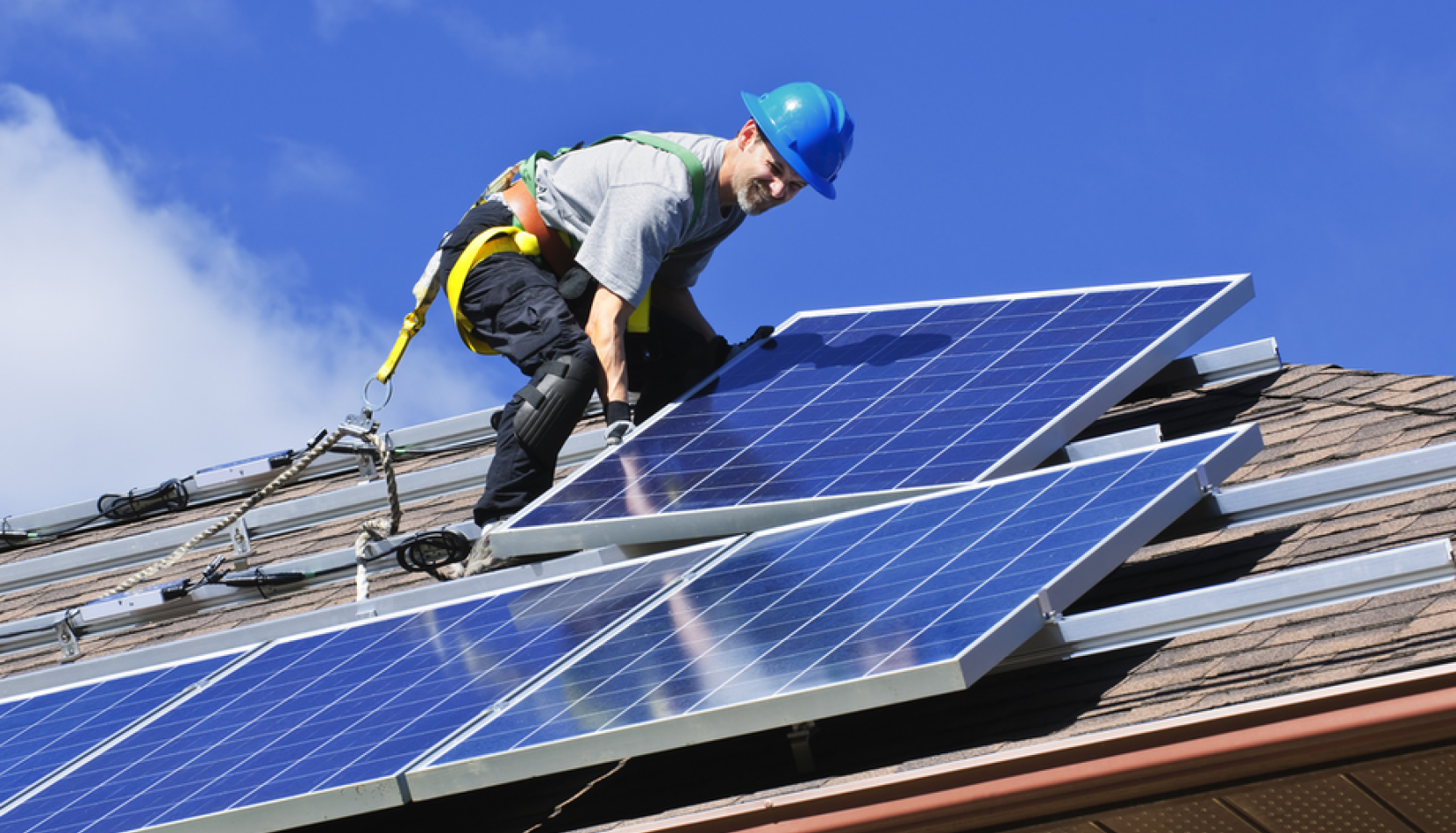
Racking is the unglamorous part of a solar system that ends up mattering enormously over 25 years. Racking that rusts, warps, or fails its anchoring is one of the most common causes of premature system issues. We specify Pion Solar racking with full engineering approval on every project, anodized aluminum rated for Nova Scotia snow and wind loads.
What Every Racking Package Includes
- Anodized aluminum rails with stainless steel or corrosion-resistant fasteners throughout.
- Engineering approval included on every project, with a stamped design package confirming the racking meets local snow and wind load requirements.
- Critter guards and flashing kits to prevent water intrusion and pest access under the array.
- Grounding and bonding hardware included as part of our standard electrical safety devices and labels package.
Every System Ships With a Stamped Design Package
Every OYO Energy proposal includes a full production and consumption forecast, roof layout with panel placement, and a project design package with professional engineering stamping. This is the same document set behind every one of our published case studies, showing exactly how each system was sized against the property's real electrical usage rather than a generic square-footage estimate.

Common Equipment Questions
See This Equipment in Real Installations

See This Equipment on Your Own Roof
Send us your property details and we will put together a full design package with the same equipment shown here.
Get Your Free EstimateOr call directly: (888) 868-8529