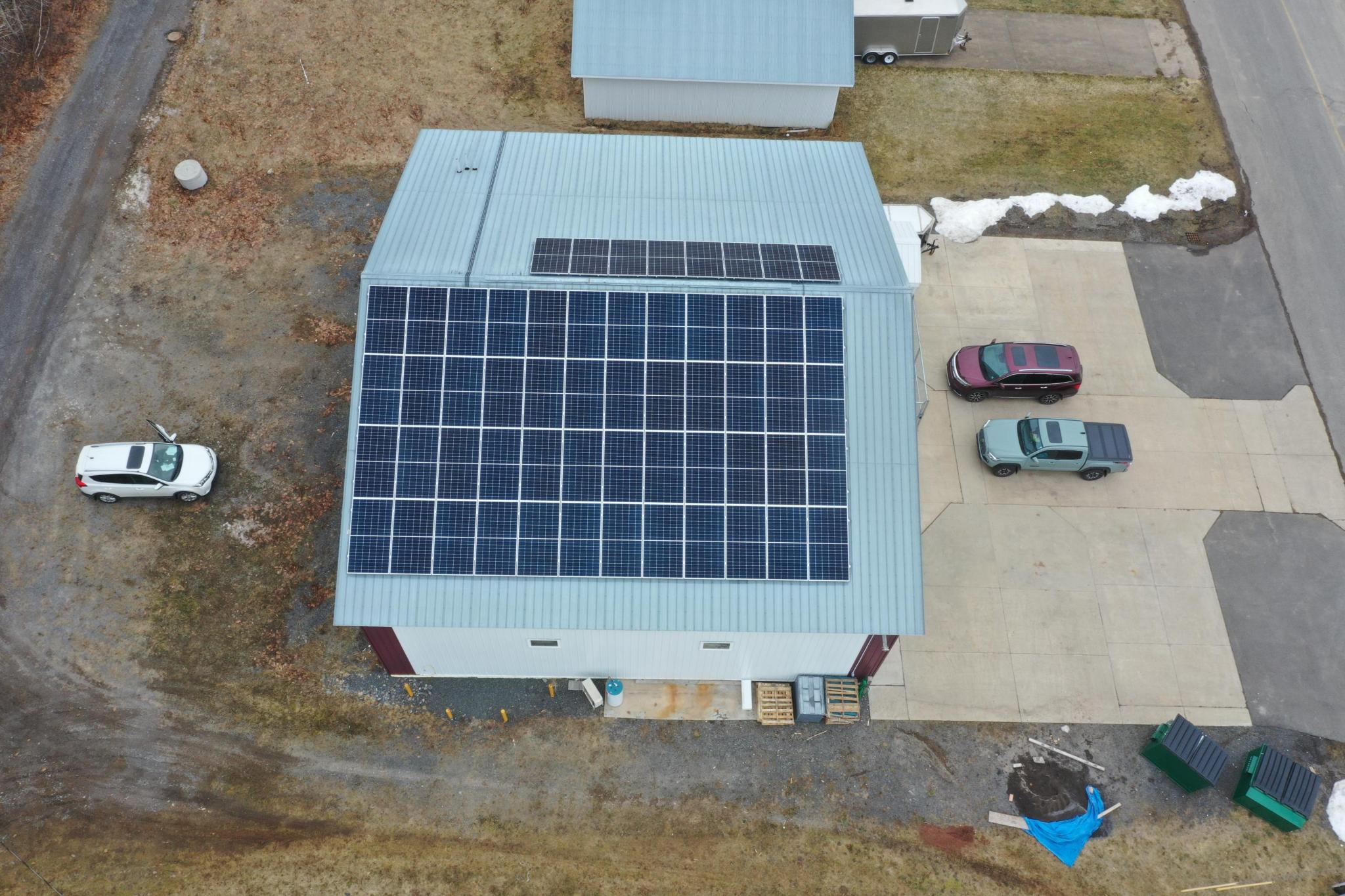
Atlantic Tech Office: 42 kW Commercial Solar in Halifax, NS
A rooftop array on a growing tech company's Halifax office, offsetting a significant share of annual electricity use and supporting the company's sustainability commitments.
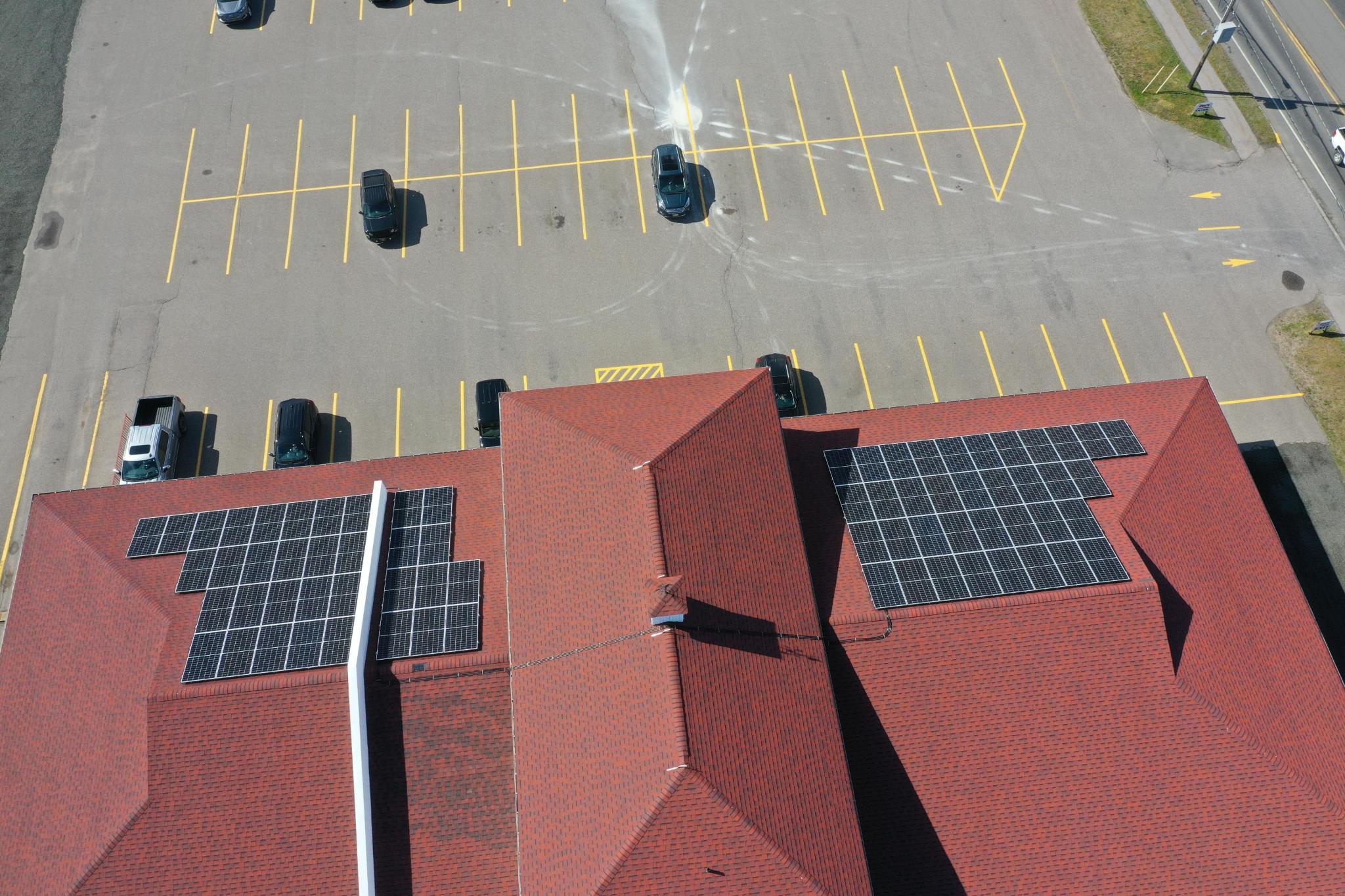
A Growing Tech Company With Predictable Daytime Load
Atlantic Tech operates out of a two-story office building on the edge of downtown Halifax, with a flat commercial roof and a workforce that runs standard business hours. That combination made the building a strong candidate for solar: nearly all of the company's electricity use happens during daylight hours, which is exactly when a rooftop array produces the most.
The company's leadership had made public sustainability commitments to clients and investors, and wanted a measurable way to back those commitments up. Their annual electricity usage ran 58,000 kWh, with a monthly NS Power commercial bill averaging $1,240. Beyond the environmental angle, the finance team wanted a project that also made sense on a straightforward payback basis.
System Specifications
- Solar panels: 96 x 440W Tier-1 monocrystalline modules with a 30-year linear performance warranty.
- Inverters: 3 commercial-grade string inverters with remote monitoring and fault alerts.
- Racking: ballasted flat-roof mounting system, no roof penetrations, engineered for local wind and snow load.
- Monitoring: production dashboard shared with the building's facilities team for sustainability reporting.
- Installed by: the OYO Energy commercial crew, coordinated around normal business hours to avoid disrupting operations.
Commercial Payback Math
Figures reflect current NS Power commercial rates and the federal Clean Technology Investment Tax Credit applied against eligible equipment costs.
System Investment
Energy and Bill Impact
Payback and 25-Year Outlook
Footnotes: Commercial rate model uses current NS Power commercial pricing with projected annual escalation consistent with approved residential increases. ITC eligibility and rate depend on business structure and should be confirmed with a tax professional. These are non-binding estimates. Actual results depend on weather, equipment performance, and program continuity.
What This Project Teaches
- Daytime-heavy loads make the strongest commercial case. A standard office schedule lines up almost perfectly with solar production hours, which is why this project's offset percentage ran higher than most residential installs.
- The federal ITC changes the payback math substantially. Without the Clean Technology Investment Tax Credit, this project's simple payback would run closer to eleven years instead of under eight.
- Flat commercial roofs need engineered ballasted racking. No penetrations were made into the roof membrane, which matters for a building still under its original roof warranty.
- Sustainability reporting was a real business driver, not an afterthought. The monitoring dashboard now feeds directly into the company's investor and client sustainability reporting.
Model the Same Math for Your Business
Send us 12 months of your commercial NS Power billing history. We will model your roof, factor in the federal ITC, and put together numbers like the ones above.
Get Your Free EstimateOr call directly: (888) 868-8529